
Questions to get to know someone
The best questions to get to know someone move in layers — start light, build to opinions and values, and only reach for something vulnerable once real trust exists. Jumping straight to a deep question with someone you barely know tends to feel invasive rather than intimate.
Light questions to get to know someone
These work early on, whether it's a new friend or an early date — low-risk enough that answering costs nothing, but specific enough to reveal a little personality.
- "What's something you're really looking forward to right now?"
- "What's your go-to comfort food?"
- "What's a show or movie you could rewatch endlessly?"
- "What's the best trip you've ever taken?"
- "What's something you're weirdly good at?"
- "What's your ideal way to spend a Sunday?"
Light questions like these establish rapport without asking either person to reveal anything they'd hesitate to share. They're the foundation everything deeper is built on.
Medium-depth questions
Once the conversation is flowing comfortably — some genuine reactions, a laugh or two, questions coming back the other way — you can move into questions about opinions, values, and preferences without it feeling sudden.
- "What's something you've changed your mind about recently?"
- "What's a belief you hold that most people would disagree with?"
- "What does a perfect weekend actually look like for you?"
- "What's something you're proud of that most people don't know about?"
- "What's a risk you took that paid off?"
- "What do you value most in the people you're close to?"
These questions ask someone to reveal a little about how they think, not just what they like — a meaningful step up from light questions without requiring real vulnerability yet.
Deep conversation starters
These ask for something closer to real vulnerability — fears, formative experiences, things that carry emotional weight. These work best once a real foundation of trust exists, whether that's built over one long, comfortable conversation or several shorter ones.
- "What's something you're afraid of that you don't usually admit?"
- "What's a moment that changed how you see yourself?"
- "What do you wish people understood about you?"
- "What's something you're still figuring out about your life right now?"
- "What's a regret you've made peace with?"
- "What does it look like when you feel truly understood by someone?"
These aren't questions to fire off in sequence — a single one, asked genuinely and given room to breathe, does more than several stacked together. If the other person seems hesitant, it's worth backing off rather than pushing; not every relationship is ready for this depth on the same timeline.
The three levels at a glance
| Level | Risk to answer | Example | Best used when |
|---|---|---|---|
| Light | Very low | "What's your go-to comfort food?" | First conversation, still building basic rapport |
| Medium | Moderate — asks for an opinion or value | "What's a belief most people would disagree with?" | Once the conversation is flowing and questions go both ways |
| Deep | Higher — asks for real vulnerability | "What's something you're afraid of that you don't usually admit?" | Once real trust has been established, not on a fixed timeline |
Questions to avoid asking too early
A few types of questions tend to backfire no matter how genuinely they're meant, simply because they arrive before enough trust exists to support them:
- Anything requiring a confession. Questions about past mistakes or regrets can feel like a trap rather than genuine curiosity if trust hasn't been built yet.
- Comparison-based questions. "Who's been the most important person in your life?" can put someone in an uncomfortable spot, especially early on.
- Questions that assume access you don't have yet. Deep questions about someone's family dynamics or past relationships work far better once you're actually close, not as a way to fast-track closeness.
- Rapid-fire deep questions back to back. Even a well-chosen deep question can feel like an interrogation if it's the third one in a row without room to breathe between them.
If a question makes you hesitate before asking it, that hesitation is usually a reasonable signal to wait.
How to layer these questions naturally
The mistake most people make with questions to get to know someone is treating the list as a script to work through in order. In practice, the layering should follow the conversation's actual energy, not a fixed sequence.
A few principles that make the progression feel natural rather than like an interview:
- Match depth, don't lead it by too much. If the other person answers a light question with something more personal than expected, that's often an invitation to go a step deeper yourself. If they stay light, match that instead of pushing further.
- Answer your own questions too. Asking a deep question without offering anything back yourself puts all the exposure on the other person, which tends to feel one-sided and can shut the conversation down.
- Let silence sit for a moment before filling it. A pause after a meaningful question often means the other person is actually thinking, not that the question landed badly — jumping in too fast can cut off a real answer.
- Read for discomfort, not just answers. A short, deflecting answer to a deeper question is a signal to pull back to lighter territory, not to rephrase and ask again.
Better versions of clichéd getting-to-know-you questions
A few standard questions to get to know someone show up so often they've stopped producing real answers — people have a rehearsed response ready before you've even finished asking. Small tweaks tend to get more honest, specific answers.
- Instead of "What's your favorite movie?" try "What's a movie you'd make someone watch to understand you better?" — it asks for a reason, not just a title.
- Instead of "What do you do for fun?" try "What's something you lose track of time doing?" — it points at genuine engagement rather than a generic hobby list.
- Instead of "Where are you from?" try "What's something about where you grew up that shaped you?" — it asks for meaning instead of a place name.
- Instead of "What are you passionate about?" try "What's something you could talk about for an hour without getting bored?" — same idea, less pressure to sound impressive.
The pattern across all of these: asking for a story or a reason instead of a fact tends to produce a more interesting, more honest answer, and it's a small enough tweak to make on the fly.
Questions to get to know someone you're dating
Dating adds a layer of intentionality — you're not just building rapport, you're also gauging real compatibility, which shifts which questions matter most.
- "What does a relationship that feels easy look like to you?"
- "What's something you need from a partner that you don't always ask for directly?"
- "What's a past relationship taught you about yourself?"
- "What are you hoping to build toward in the next few years?"
- "What makes you feel most appreciated?"
Pace matters even more here than with a new friend — a deep question two dates in can read as intense rather than genuine, even when the intent is sincere. Let the relationship's actual comfort level set the pace rather than a mental timeline.
Questions to get to know a new friend
New friendships benefit from questions that build shared history rather than romantic compatibility — the goal is finding overlap and building trust over repeated conversations, not a single deep exchange.
- "What's something we probably have in common that hasn't come up yet?"
- "What's a friendship that shaped who you are?"
- "What do you look for in the people you're close to?"
- "What's something you wish you did more of with friends?"
For more on the mechanics of keeping this kind of conversation flowing once it starts — active listening, the follow-up-question habit — see how to keep a conversation going. And if you're building rapport in a group setting rather than one-on-one, get to know you questions covers question sets and games designed for that format instead.
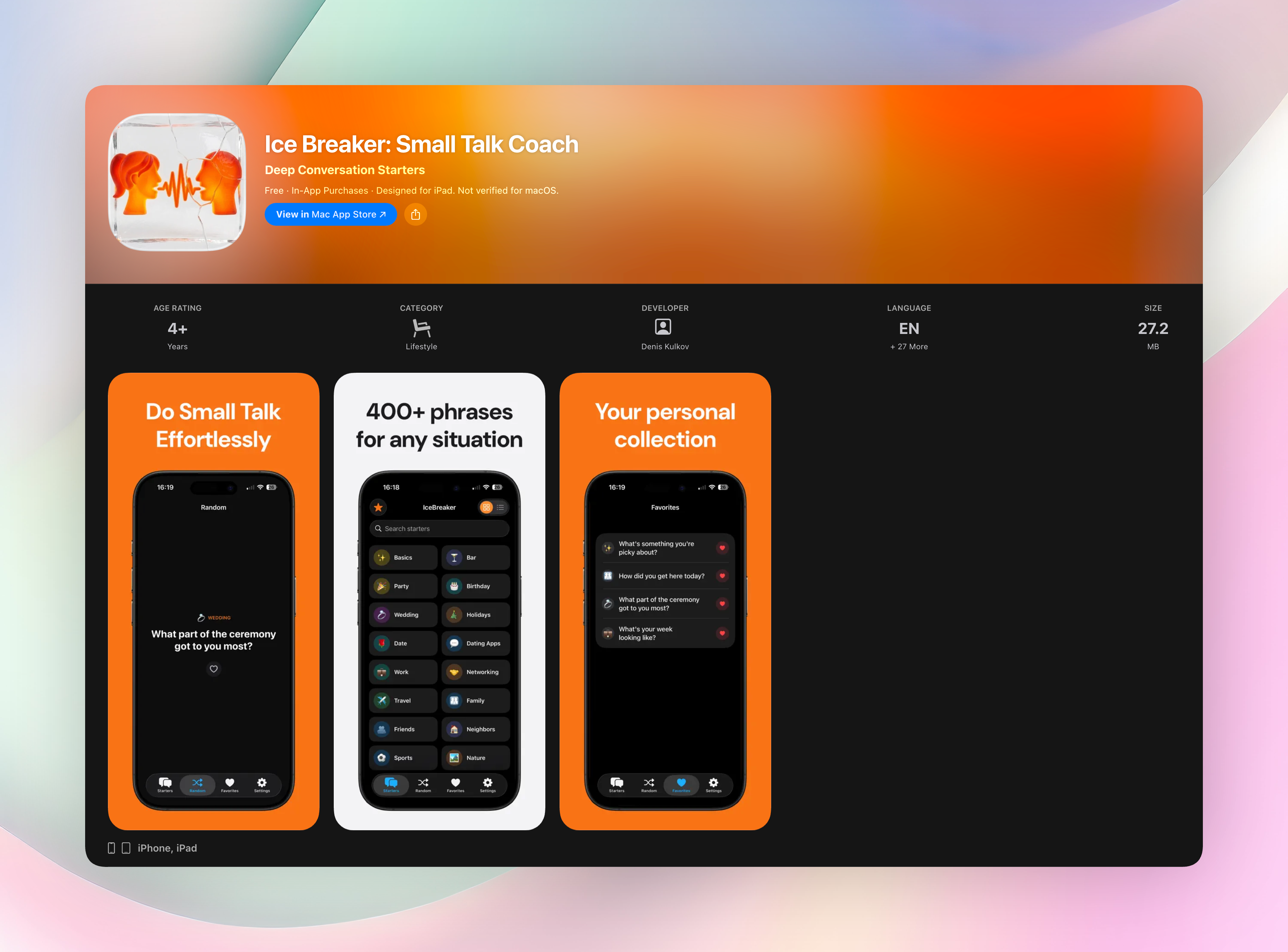
If you tend to blank on what to ask next once the light questions run out, Ice Breaker is a free app with 480 conversation starters across 16 categories, so you have a next question ready whether you're looking for something light or something deeper.
FAQ
What are good questions to get to know someone?
Start with light, low-risk questions about preferences and interests, then move into values and opinions once the conversation feels comfortable. Save deeper, more vulnerable questions for once real trust has built up between you.
What are some deep conversation starters that don't feel too intense?
Framing matters as much as the question itself — asking something reflective ("What's a moment that changed how you see yourself?") in a calm, genuine tone lands very differently than the same question asked abruptly. Offering your own answer first also softens it.
How do I know if it's too soon to ask a deeper question?
If the conversation so far has been mostly light and the other person hasn't offered anything personal unprompted, it's usually too soon. A good rule of thumb is to match the depth they've already shown, rather than leading well past it.
What questions should I ask on a first date to actually get to know someone?
Questions about preferences and outlook — what a good weekend looks like, what they're excited about right now — tend to work better than heavy relationship questions this early. Save compatibility-specific questions for once there's a second or third date's worth of comfort.
How many questions should I ask in one conversation?
Fewer than it might feel like you need — one good question, followed by genuine engagement with the answer, does more than five questions asked back to back. A conversation that feels like an interview usually has too many questions and not enough follow-up.
Free Ice Breaker tools
- Conversation Starter GeneratorChoose your relationship, setting, and tone to get a low-pressure opener plus a natural follow-up question.
- Get to Know You Worksheet MakerChoose a group, audience, depth and question count. Add your own prompts or use the visible built-in question bank.
- How Well Do They Know Me Quiz MakerChoose a group, category, difficulty and question count. Add personal questions or use the visible built-in bank.
- Icebreaker GeneratorChoose your group, headcount, and time window to get a practical icebreaker with simple instructions and a realistic duration.
- Social Intelligence TestReflect on eight everyday scenarios to see practice scores for cue recognition, listening, conversational reciprocity, and response choice.